Epam Systems
How I pivoted an Internal B2B Product and found Real Business Value
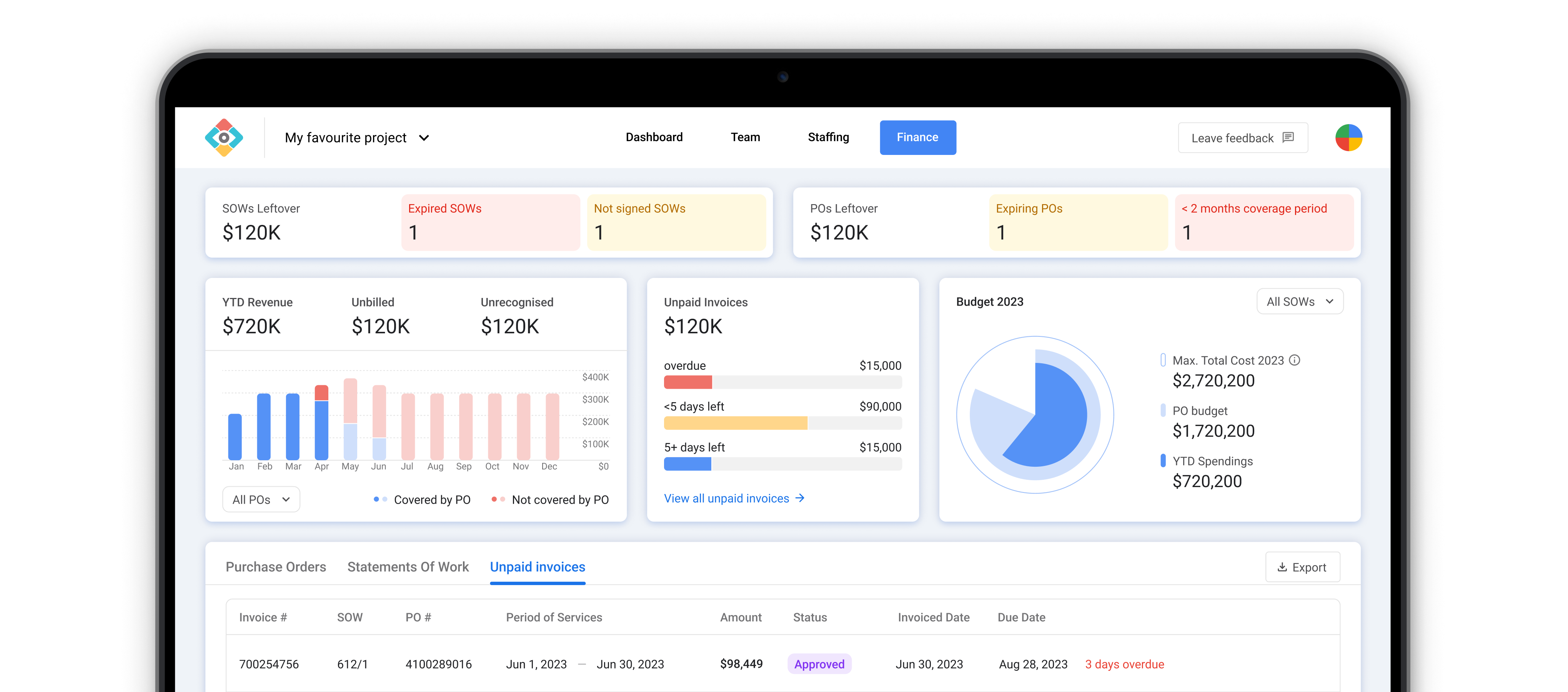
This case describes how an internal B2B product initially built as a “gift” for a client failed to deliver value — and how I helped pivot it toward a new target user, preserve stakeholder support, and turn it into a meaningful business tool despite limited authority, no direct access to the end client, and initial resistance from stakeholders.
EPAM is a global outsourcing company delivering complex, long-term projects for enterprise clients. Alongside client work, EPAM develops internal products to optimize processes and reduce operational costs.
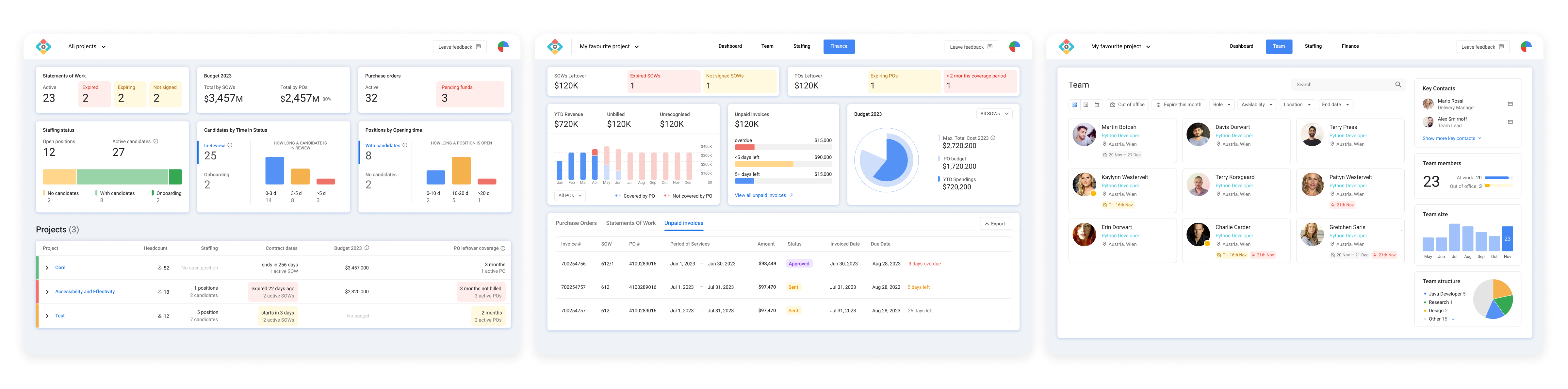
I joined one of these internal initiatives shortly after its inception. The product was initiated by several managers as a client-facing portal intended to provide transparency into project status, staffing, contracts, budgets, candidate pipelines. It was designed and shipped quickly, largely based on internal assumptions rather than validated user needs.
After the initial MVP release, the product entered a slower phase — and that’s when structural problems became visible.
Two critical questions emerged during internal demos:
At this point, the product was at risk of being deprioritized or shut down.
I was the sole UX designer in an international, remote, cross-functional team (Product Owner, Product Expert, Business Analyst, 2× FE, 3× BE).
I initially focused on UI execution to deliver the MVP. But after release, I identified a lack of clear business value and initiated research that reframed the problem and redefined the product’s value proposition around a new primary user, securing continued sponsorship.
Following approval of the new direction, my role expanded toward product ownership. Alongside hands-on design, I:
Since direct user research with the client was impossible, I took a proxy-research approach.
I started by reviewing an existing Service Blueprint created by a previous team and consulted internal experts to understand:
In parallel, I collected quantitative data from Finance, HR, and Operations departments.
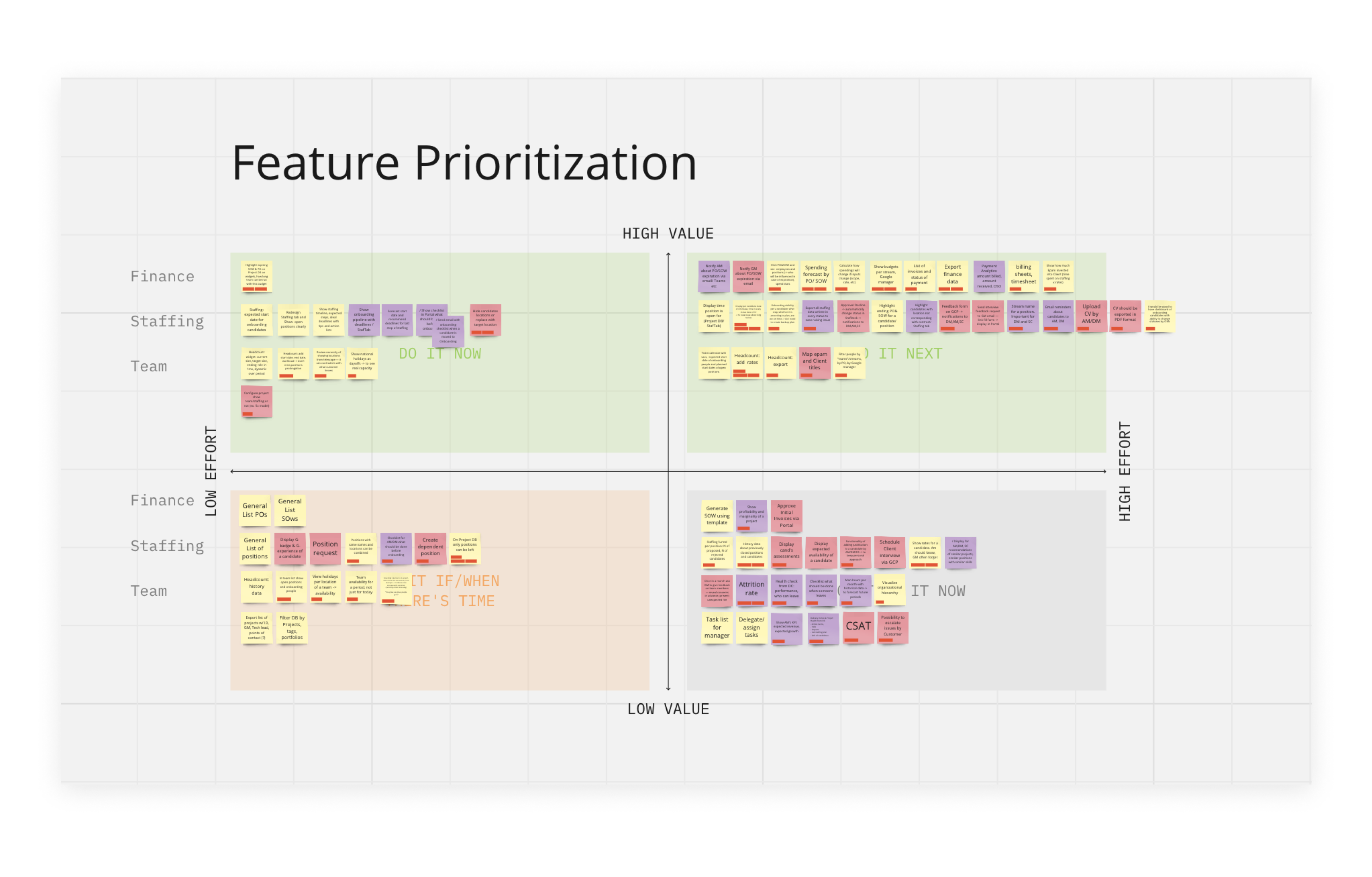
Based on these insights, I facilitated a brainstorming session to identify research directions with the highest potential business impact.
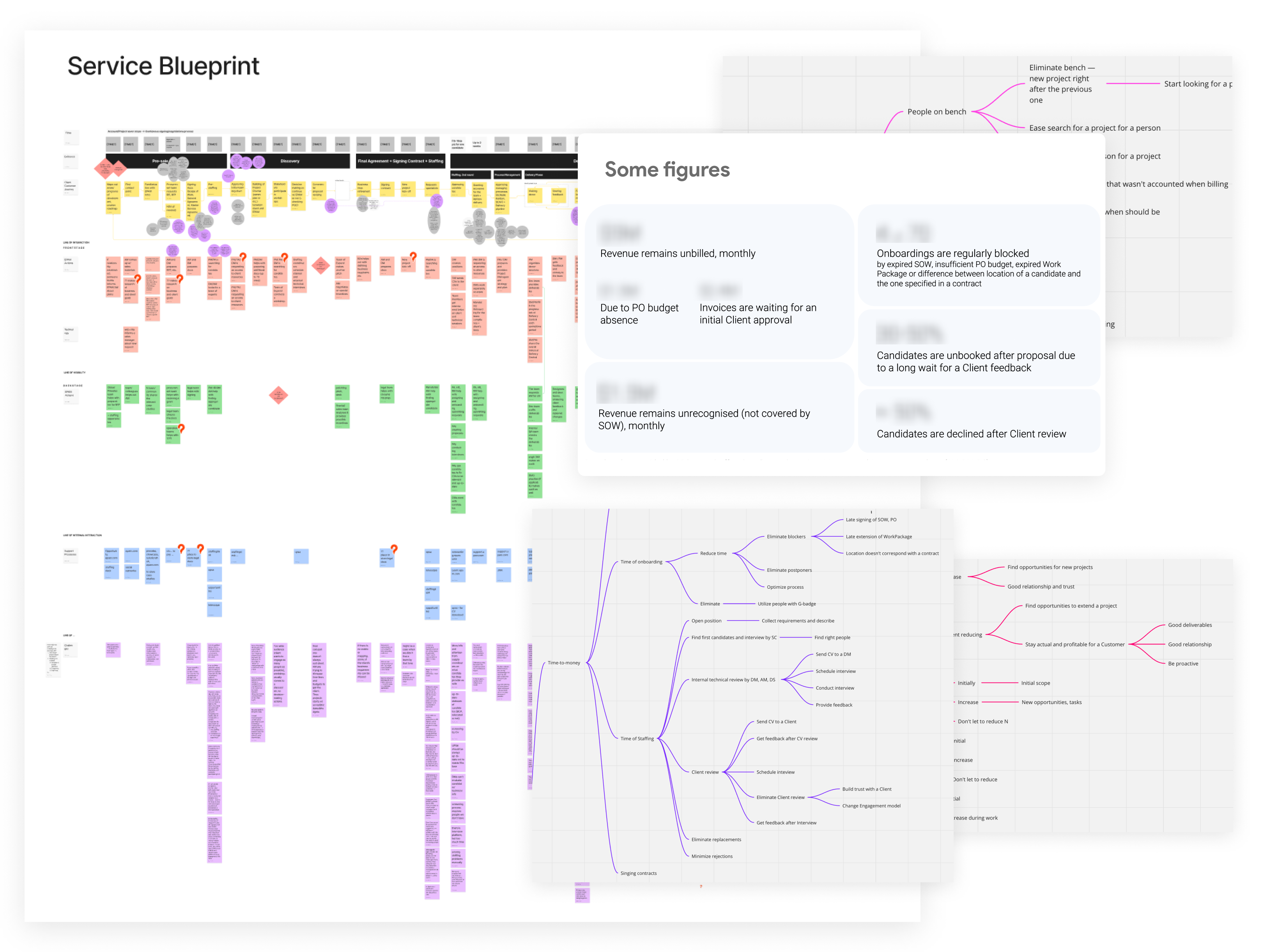
After identifying the most critical problem areas from a business perspective, I conducted 12 interviews with internal roles closely connected to client work.
In addition, I organized feedback sessions around the existing portal to ground discussions in a concrete product experience.
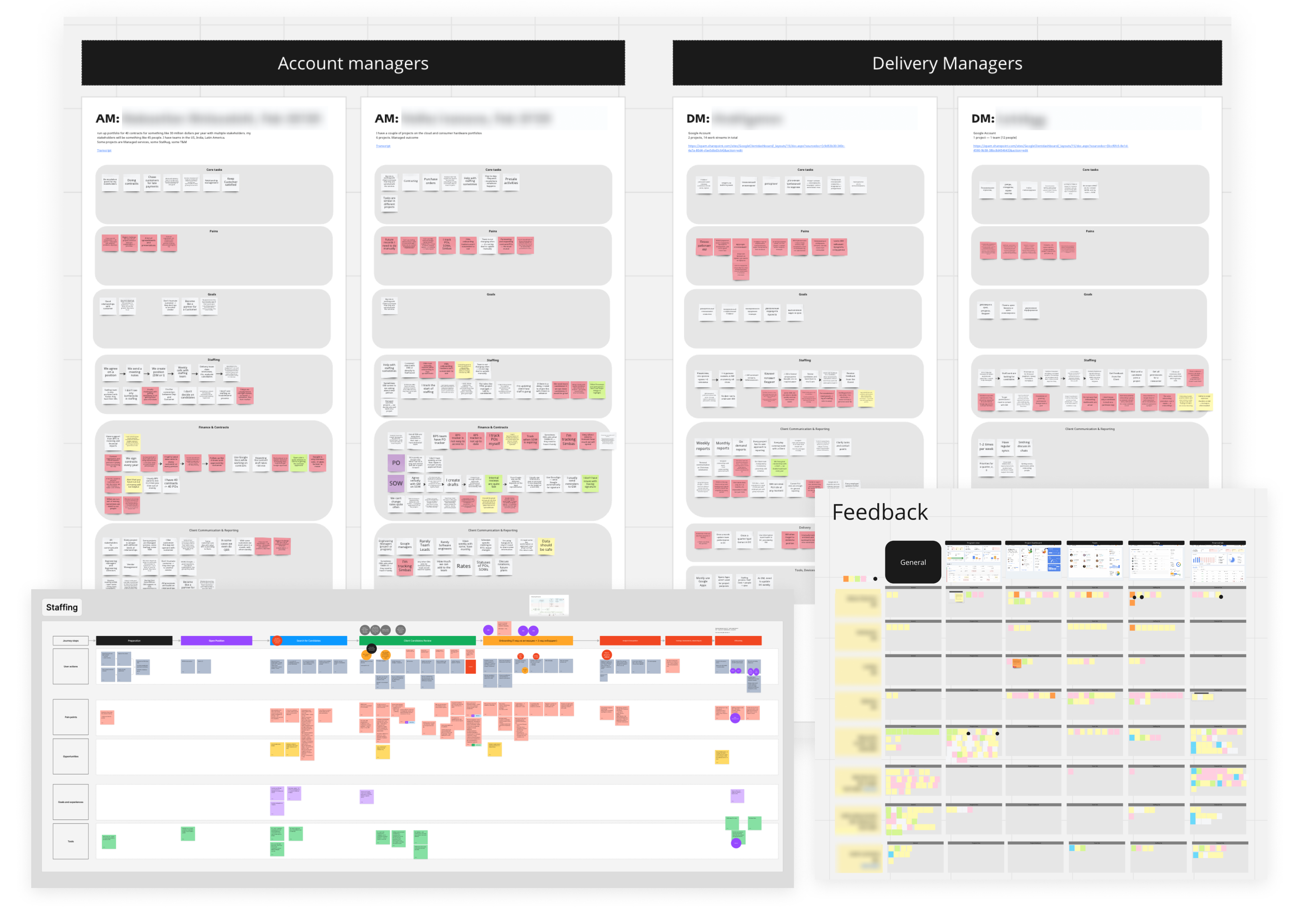
All insights were clustered and analyzed together with managers, focusing on the business drivers they affected:
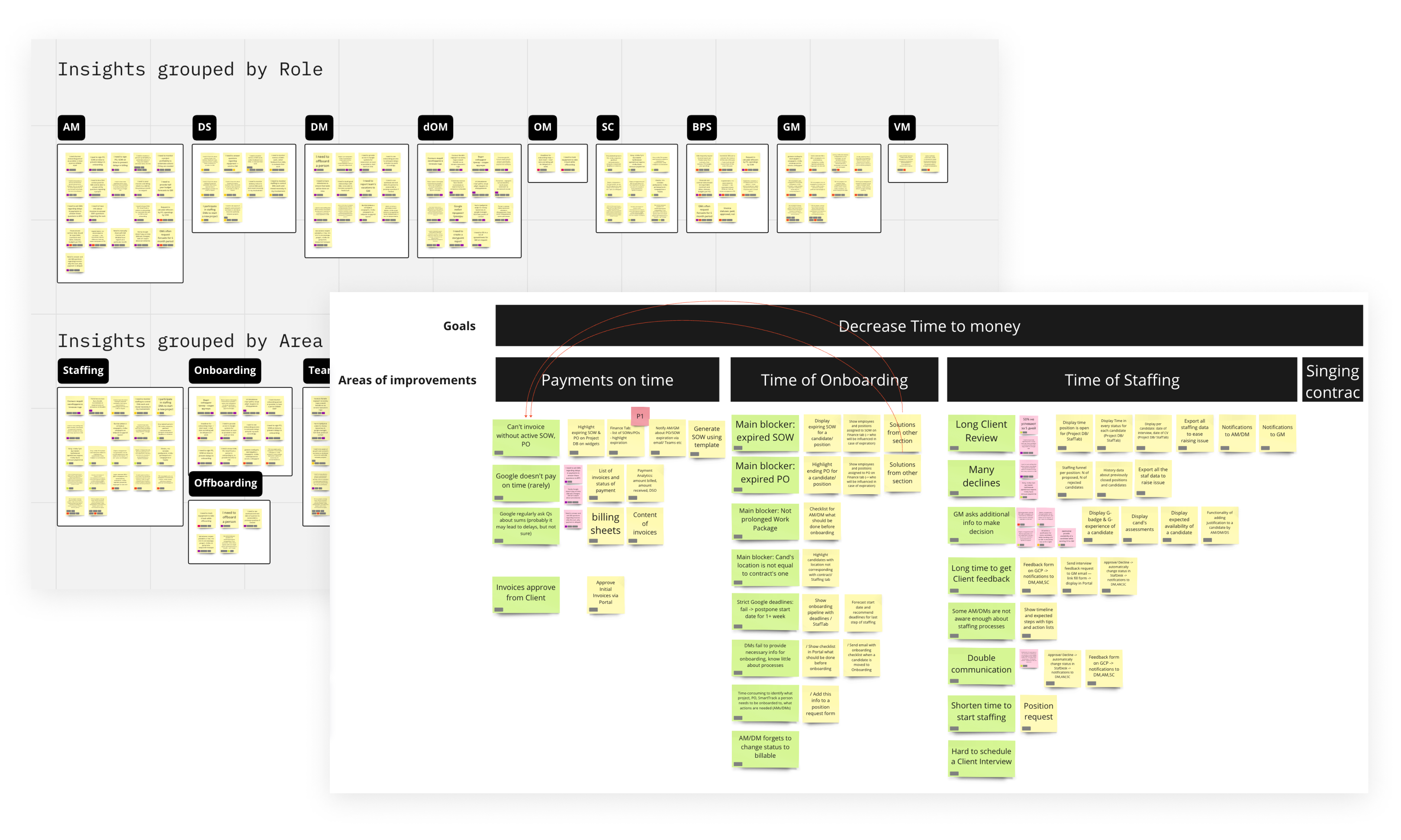
The main value gap was not on the client side — it was inside EPAM, specifically in the Account Manager role.
Account Managers:
As the primary “information proxy” between EPAM and the client, this role represented both:
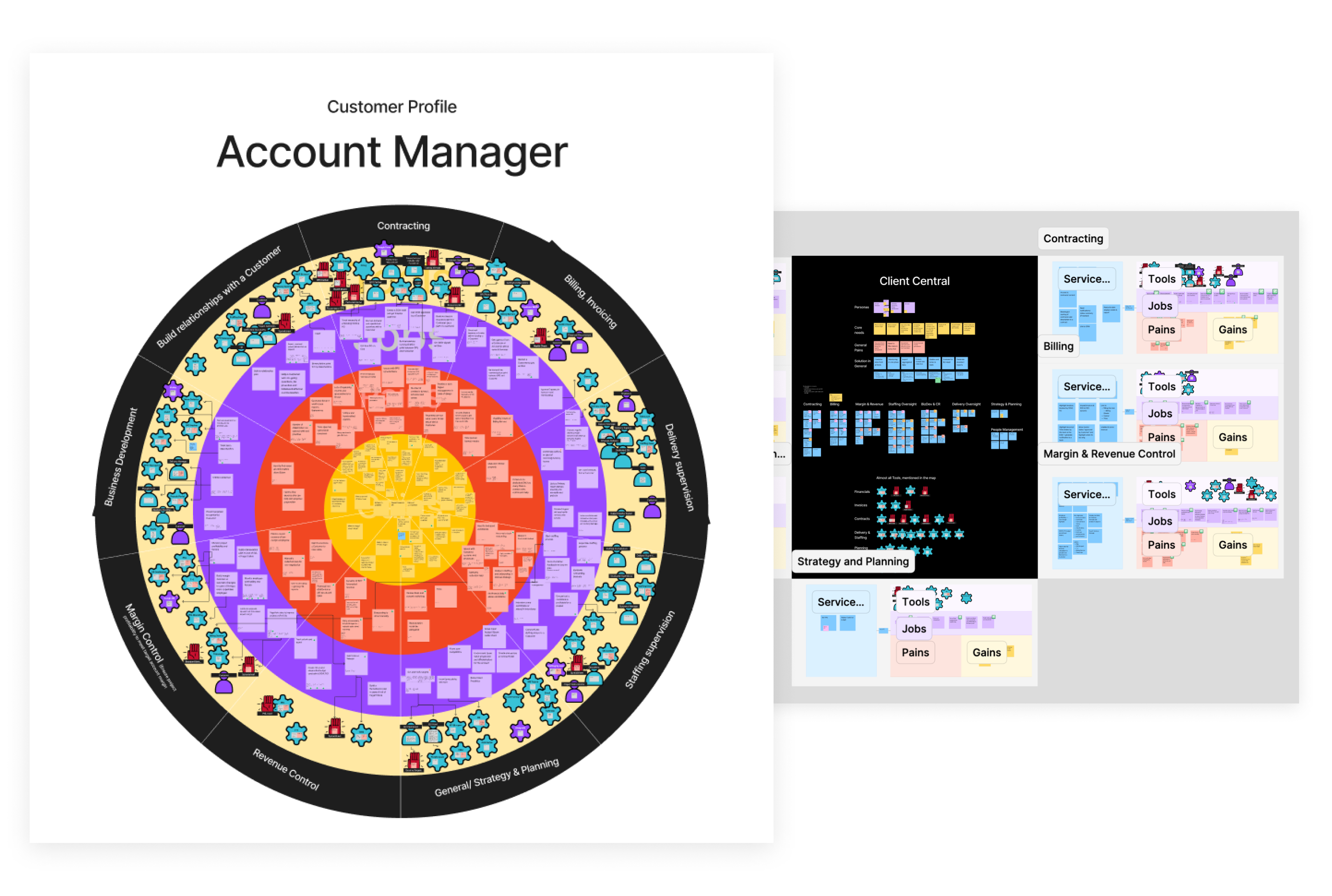
I proposed a strategic pivot with Account Manager as a Primary user. With this change we could generate immediate internal value, create clearer ROI justification, gradually onboard clients later via a trusted proxy user.
To support this direction, I created a Value Proposition Map, breaking the account manager’s work into:
This reframing was presented to product sponsors and leadership and approved as the new product vision.
The platform evolved into an internal account management tool providing:
Design focused on: